Be Careful What You Focus On: Why Your Mind Needs Boundaries (and How to Set Them)

Photocred: @purplepanther761
Even when life is good, your mind doesn’t always cooperate.
There’s a version of life I used to imagine would finally quiet my mind.
No schedule. No pressure. No obligations. Just freedom.
And then I lived it.
My husband and I spent a year traveling during what we half-jokingly called our “one-year honeymoon.” We moved between countries, woke up without alarms, and built our days around curiosity instead of responsibility. It was, by most standards, an ideal life.
And yet, my mind didn’t suddenly become peaceful.
If anything, it found new ways to create noise.
I would catch myself spiraling about whether I was “doing enough” with my time. Whether I should be more productive. Whether I was wasting an opportunity that other people would have used better. I created pressure where none existed. I manufactured stress in a life that was, objectively, light and free.
That was the moment I started to understand something uncomfortable:
Your external life can be calm, stable, even beautiful, and your internal world can still feel chaotic if you’re not paying attention to what you’re feeding your mind.
Your Mind Processes Everything You Give It
We’re used to thinking about input in physical terms.
We know food matters. We talk about nutrition, balance, and what fuels our bodies, but we rarely apply that same level of awareness to what we consume mentally.
The truth is, your mind is constantly processing input.
Every headline you read.
Every conversation you have.
Every social media scroll.
Every quiet thought you repeat to yourself.
All of it gets taken in, interpreted, and turned into something that shapes how you feel and how you see the world.
If you repeatedly focus on what’s missing, your mind learns to look for lack.
If you focus on what’s wrong, it becomes easier and easier to find problems.
If you tell yourself, even subtly, that you’re behind, not doing enough, or not where you should be, your mind begins to organize your reality around that belief.
And the difficult part is that this doesn’t happen dramatically, it happens through repetition.
Why Your Brain Defaults To The Negative
Part of this isn’t your fault.

Photocred: aresbuddhi
The human brain is wired to notice what’s wrong.
From an evolutionary perspective, this made sense. Back in the days of living in caves, paying attention to danger kept us alive. The brain learned to prioritize threats, risks, and problems because those were the things that required immediate action.
That wiring hasn’t disappeared just because our lives look different now.
Instead, it shows up in more subtle ways:
You remember criticism more than praise
You replay awkward conversations more than good ones
You anticipate what could go wrong instead of what could go right
Your brain is constantly scanning for problems, even when there aren’t any immediate threats.
Which means if you don’t consciously guide your focus, your mind will naturally drift toward negativity.
The Modern Problem: Too Much Input, Not Enough Intention
There’s another layer to this that makes it harder than ever.
We are constantly consuming information.
Scrolling through headlines. Watching short videos. Skimming posts. Absorbing opinions, outrage, updates, and commentary from people we don’t know about situations we often can’t control.
It feels harmless because it’s quick. Because it’s “just a few minutes.” Because it doesn’t require effort.
But over time, it adds up.
You end up feeding your mind a constant stream of:
urgency
comparison
fear
outrage
distraction
And then you wonder why your thoughts feel scattered, heavy, or difficult to manage.
The issue isn’t just what you’re consuming. It’s that you’re consuming it without intention.
You Can’t Control Everything—But You Can Control Your Focus
We are living in a time where it’s very easy to feel overwhelmed.
There are real, serious issues in the world: climate change, political instability, conflict, inequality, loss, uncertainty. Ignoring those realities isn’t the answer.
But constantly focusing on them, without the ability to act meaningfully, doesn’t help either.
It often just leads to stress, anxiety, and a sense of helplessness.
There’s an important distinction here:
Being aware is not the same as being consumed.
You can stay informed without letting every problem become your personal emotional burden.
You can care deeply about the world while still protecting your mental space.
Because if your mind is constantly overwhelmed, it becomes harder to show up well in your own life, and in the areas where you actually can make a difference.
What You Focus On Shapes How You Experience Your Life

Photocred: @Kashtandon
There’s a quote I come back to often:
“We don’t see the world as it is, we see it as we are.”
Your thoughts don’t just reflect your reality, they help create it.
If your mind is constantly telling you that your life isn’t enough, it will start to feel that way.
If your focus is always on what’s missing, you’ll overlook what’s already there.
If your attention is scattered across everything that’s wrong, it becomes harder to notice what’s working.
This doesn’t mean pretending everything is perfect.
It means recognizing that your focus has direction, and that direction matters.
How To Take Back Control Of Your Focus
It’s about being intentional.
Here are a few ways to start doing that in a way that actually feels doable:
1. Pay attention to what you’re consuming daily
Start noticing your input.
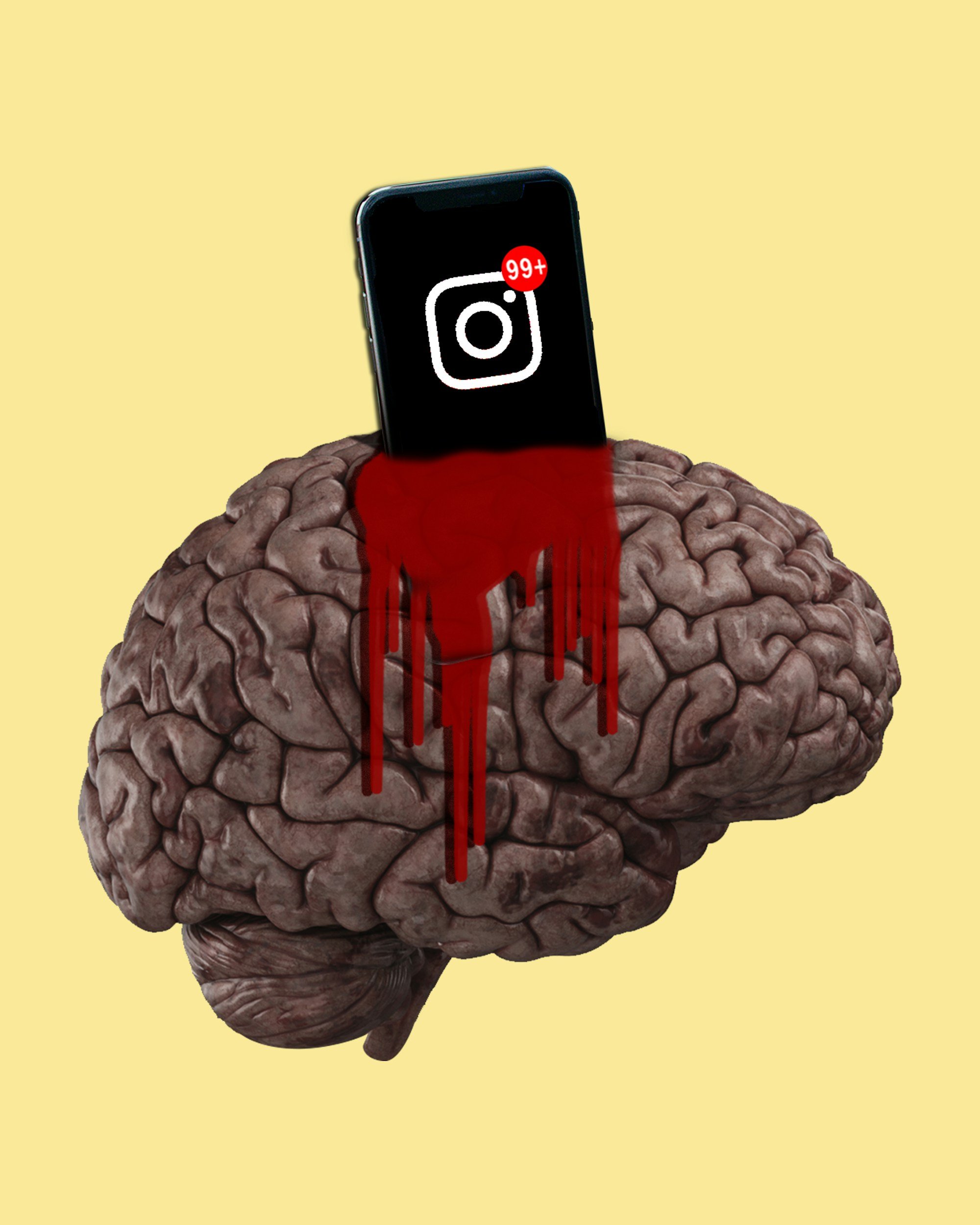
Photocred: @gasparuhas
What are you reading first thing in the morning?
What are you scrolling through at night?
What kind of content are you consistently taking in?
You don’t need to cut everything out. Just begin by asking:
“Is this helping me think clearly, or is it adding noise?”
That one question can shift a lot.
2. Replace passive consumption with intentional learning
There’s a difference between absorbing information and building knowledge.
Scrolling gives you fragments.
Intentional learning gives you depth.
Instead of filling every gap with random input, choose something with purpose:
a book you actually want to finish
a topic you want to understand more deeply
a skill you want to develop
Even small shifts here can change how your mind processes information.
3. Catch the patterns in your thinking
Your thoughts often follow familiar loops.
For me, it was productivity.
Even in the most relaxed period of my life, my mind kept returning to the idea that I wasn’t doing enough.
Once I noticed that pattern, I could start questioning it instead of automatically believing it.
Try asking:
Is this thought actually true?
Is it helpful?
Would I say this to someone else?
Awareness doesn’t eliminate negative thoughts, but it creates space between you and them.
4. Practice redirecting your focus (not forcing positivity)
This isn’t about pretending everything is fine.
It’s about gently shifting your attention.
If your mind starts spiraling into what’s wrong, try bringing it back to something real and present:
what you’ve done today
what’s working right now
something small you’re grateful for
5. Accept that this is ongoing work
This isn’t something you fix once.
Your brain will continue to default to old patterns. The world will continue to offer endless input. Your attention will drift.
That’s normal.
The goal isn’t perfection. It’s awareness.
Each time you notice where your focus has gone, you have a chance to choose again.
Final Thoughts: Your Mind Will Lead, Unless You Do

Photocred: @studiokvr
What I’ve learned, is that your mind doesn’t automatically become a calm, supportive place just because your life looks good from the outside.
It follows what it’s fed.
If you don’t choose what you focus on, something else will.
Algorithms. News cycles. Old habits. Fear. Comparison.
And not all of those have your best interests in mind.
So the responsibility is yours.
To notice.
To choose.
To redirect when needed.
Because over time, the things you focus on don’t just pass through your mind.
They shape it.
And that, more than anything, shapes how you experience your life.
