Life Didn’t Go as Planned? Here’s How to Handle It
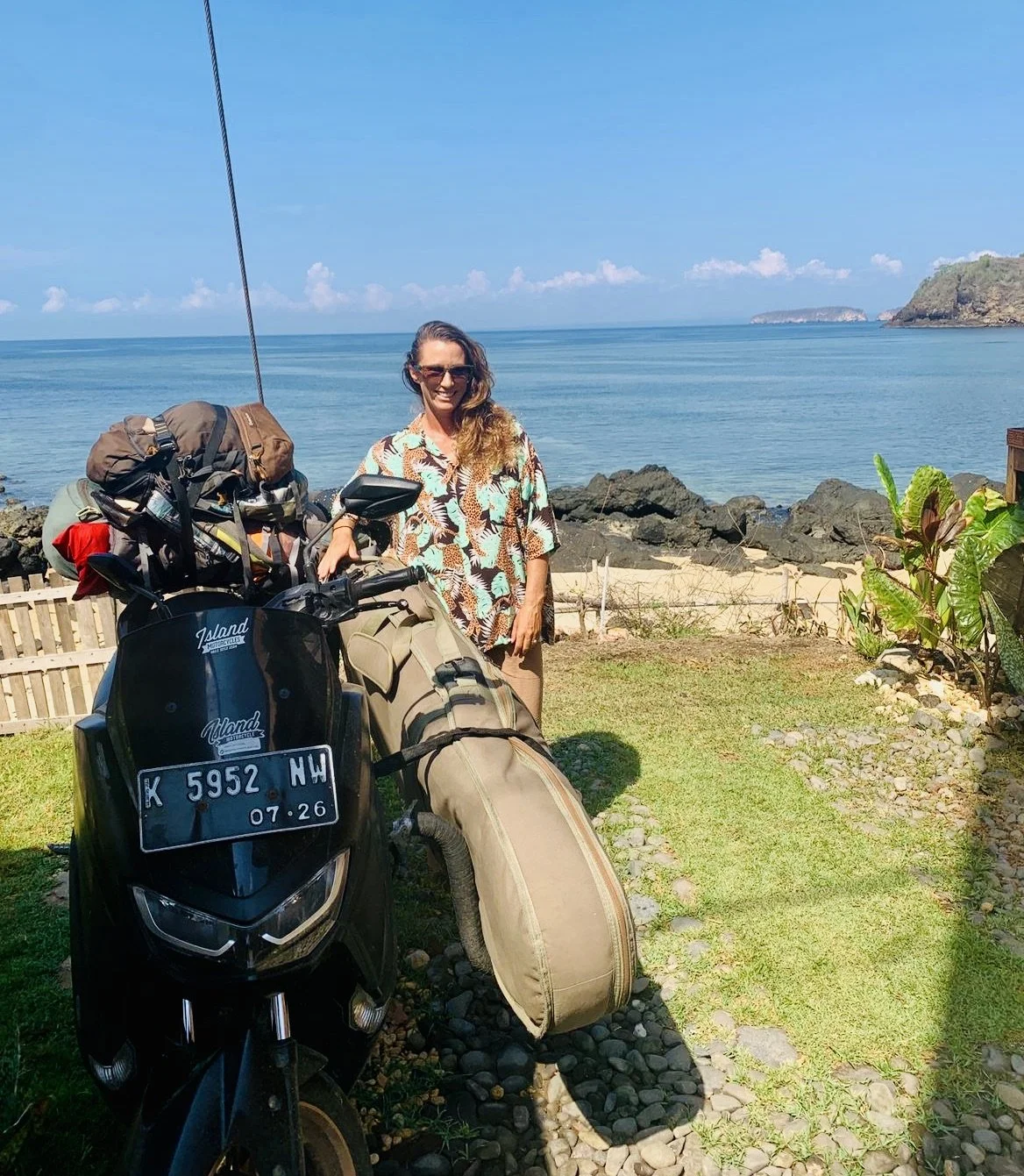
All smiles with our bike packed and ready-Indonesia, 2024
My sunglasses shielded my eyes from the blinding Bali sun, the warm wind tugging at my hair as we zigzagged through the chaos of traffic. Scooters buzzed past like angry hornets, horns blaring, the scent of exhaust mixing with the faint aroma of sizzling satay from roadside stalls. My arms were wrapped tight around my husband’s waist, my knees braced against the seat as we whizzed between trucks, stray dogs, and roadside vendors balancing baskets of fruit as they threaded their way across the road.
We’d done it. We’d found a motorbike sturdy enough to carry both of us, one overstuffed backpack strapped to the back, and my husband’s two surfboards balanced precariously like oversized wings.
Freedom.
Pure, unfiltered freedom.
We could island hop anywhere in Indonesia for the next three months—chasing swells and whatever else the tide pulled us toward.
First stop: Nusa Penida. Snorkeling in crystal coves. Epic sunsets bleeding into the sea. Gliding alongside manta rays the size of small cars. After a week in over-populated Bali, I couldn’t wait.
The Ferry That Wasn’t
Two hours later, we rolled into the ferry terminal, our faces coated with a fine layer of road dust, my butt numb from the ride. We swung off the bike, stretching our legs, and approached the ticket booth.
“No ferry, miss,” the man said flatly.
I blinked. “Excuse me?”
He shrugged, leaning back in his chair. “Ferry broken. One month broken already. Passenger ferry okay—but not with bike.”
My husband glanced at me, his forehead creasing. “So…where’s the passenger ferry?”
The man gestured vaguely toward the horizon. “Other side. One and half hour drive.”
I sighed, pressing my lips together. “Shit. That’s where we just came from.”
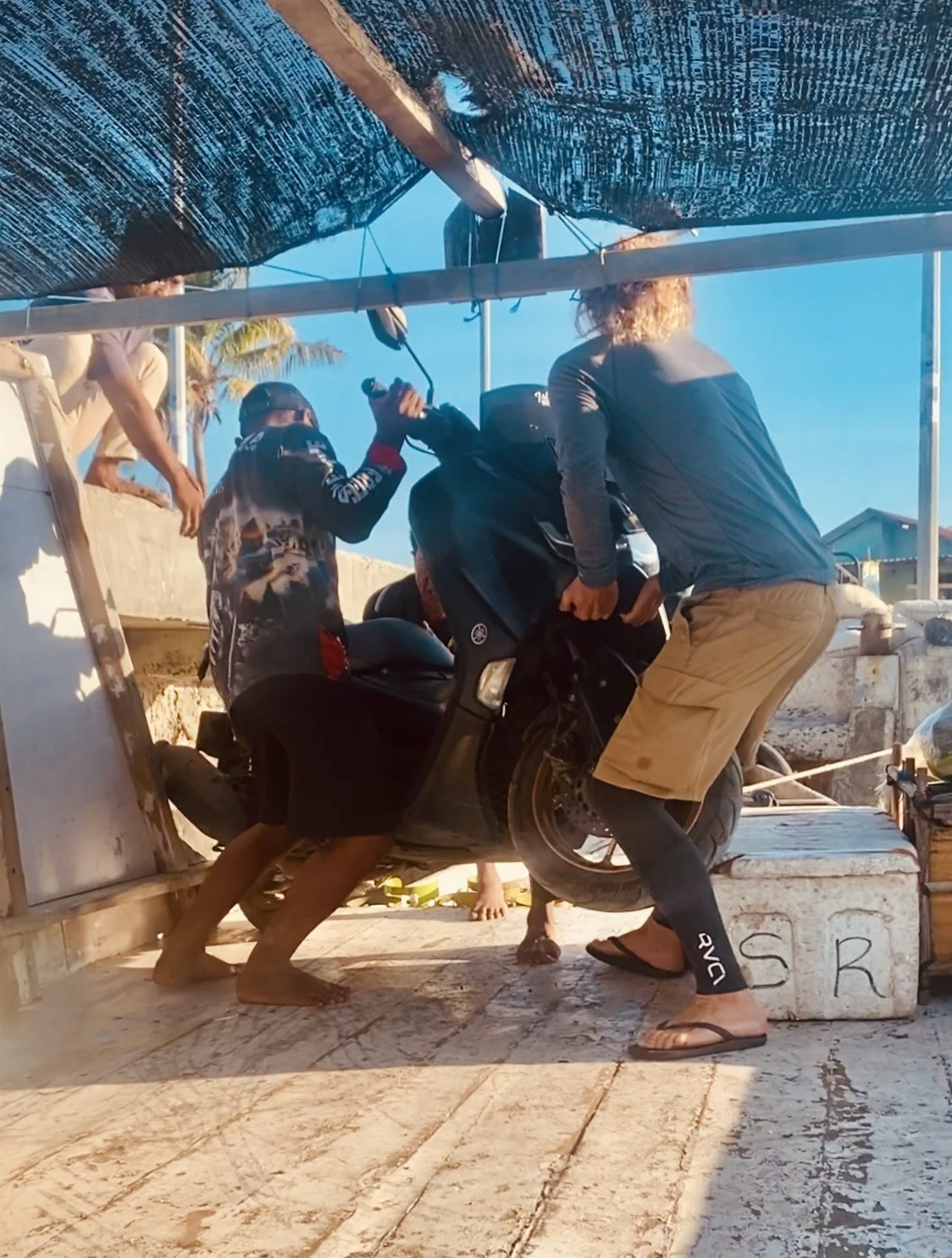
A DIY solution to getting our motorbike onto a tiny Indonesian ferry- 2024
When Plans Fall Apart
Unpopular but very real opinion:
Shit happens.
Plans crumble.
Life veers wildly off-course.
The real test isn’t whether we can avoid these moments—it’s how we meet them. Emotional steadiness doesn’t come from controlling everything; it comes from making peace with the fact that life rarely unfolds the way we pictured.
When plans fall apart, our first reaction is often irritation, anxiety, or disappointment. It’s human. But sometimes, we manage to pause, take a step back, and look at the situation differently—and suddenly it feels a lot less overwhelming.
The Power of Reframing Your Perspective
That doesn’t mean pretending everything is fine. It means choosing to see the same moment through a new perspective. And when the perspective shifts, the way we feel about it often shifts too.
Psychologists call this approach cognitive reappraisal, and it’s a tool anyone can practice. Our brains are wired to respond to the stories we tell ourselves. Cognitive reappraisal—a fancy way of saying “reframing the situation”—is all about changing the story behind how we feel, rather than trying to push the feeling away.
Research shows that people who practice this regularly tend to handle stress better, feel less anxious, and bounce back from setbacks more easily. It’s not about forcing positivity—it’s about being flexible in how we interpret what’s happening. A delay can become a moment to rest. A mistake can become a lesson. Small shifts in perspective change the emotional weight of the situation.
How to Practice Cognitive Reappraisal
Here’s a simple way to start shifting your perspective, step by step:

Photocred: @theshubhamdhage
Step 1: Take a step back. Pause and zoom out from the moment. Ask yourself: Will this still feel as intense next week, next year, or five years from now? Most of the time, it won’t. This bigger-picture view helps you loosen the grip of immediate stress and gives your mind some breathing room.
Step 2: Look for another angle. Try to see the situation in a new light. Could something positive come from this? Maybe it’s an unexpected opportunity, a lesson, or even just a funny story you’ll tell later. Changing the way you frame the situation can shift the way it feels emotionally.
Step 3: Talk to yourself like you would a friend. When things go wrong, we’re often our harshest critics. Imagine a friend was in your shoes—what would you say to them? Likely something kind, calm, and reassuring. Now turn that tone inward. This simple switch can stop the spiral of frustration or self-blame and help you feel steadier.
Practicing this doesn’t erase challenges or magically fix what went wrong. But it gives you a better way to respond, one that makes the situation easier to carry. Over time, these small shifts become second nature, helping you face setbacks with more calm, clarity, and resilience.
Our Detour to Lombok
So how did we handle our situation?
We stood there for a moment, the tropical heat sticking my shirt to my back, bikes revving around us. Then we traded a glance—the kind that says Ok, new plan.
From here, there was another car ferry heading to Lombok, an island we’d planned to visit later anyway. No hotel booked, no clue where we’d end up—but we’d figure it out during the five-hour crossing.

A simple home and the majestic rice fields of Tetebatu, Indonesia- 2024
Hours later, we rolled off the ferry and headed to the far north, a place we hadn’t even considered visiting. Rice terraces curved in green waves across the hillsides, waterfalls tumbled down from the jungle, and the air smelled of damp earth. It was breathtaking. And completely unexpected.
It was also exactly what we needed.
The universe, I’ve learned, doesn’t always hand us what we ask for. Sometimes it gives us detours—harsh, inconvenient, even maddening ones—that end up being the lessons or moments we were meant to have.
My hardest seasons—the confusion, the exhaustion, the sheer discomfort—have always been the ones that shaped me most. Dengue fever, loss, malaria…those were battles I never would have chosen. But they made me stronger.
So when the road suddenly ends, or the ferry breaks down, or the path ahead shifts without warning—don’t curse the detour. Follow it. It might just lead you somewhere better than where you were headed.
Want More Misadventures and Lessons?
If you want to read more about the misadventures, detours, and lessons that shaped me along the way, you can find my book, Stray: Breaking Free, Falling Hard, and Growing Stronger, available now wherever books are sold.
